We will not promise you a summit.
Mountains do not negotiate. Anyone who guarantees a summit is selling you a story, not an expedition.
Nepal & Elbrus · Expeditions led by Chatur Tamang since 1995
At altitude, the difference between a safe decision and a dangerous one usually comes down to who is leading. We build expeditions around methodical preparation, honest assessments, and calm leadership when conditions change.
8 Everest summits. 187 Elbrus summits. Same approach every time.
It is the operator you trusted to run it. Guides who forge certifications or work under borrowed names. Companies that promise one plan by email and deliver a different one in Kathmandu. Substitute guides who show up not knowing your itinerary, your inclusions, or even the name of the company they are supposedly working for.
These are not rare stories. They show up in expedition forums, in trekking reviews, in rescue investigations. And they are the reason experienced climbers spend more time researching operators than researching routes.
If you have been reading those stories and wondering how to tell the difference, you are asking the right question.
Some things we refuse to do - because they put climbers at risk.
Mountains do not negotiate. Anyone who guarantees a summit is selling you a story, not an expedition.
If your timeline is unrealistic or your objective does not match your experience, we will say so - before you book, not after.
Speed kills at altitude. We build schedules around physiology, not convenience.
When weather closes in or plans change, your guide stays present. Decisions get explained. You are never left guessing.
Every inclusion, every exclusion, every cost - documented before you pay. No vague itineraries, no “we will discuss on arrival,” no fees that appear after you land in Kathmandu.
Not fifty meters ahead on a phone. Not back at the lodge while you cross a glacier alone. Your guide sets the pace to the slowest member and stays within voice range the entire day.
Weather delays, route changes, and turnaround calls happen on every expedition. The difference is whether those calls are explained clearly or handed down without context. We brief the team before, during, and after.
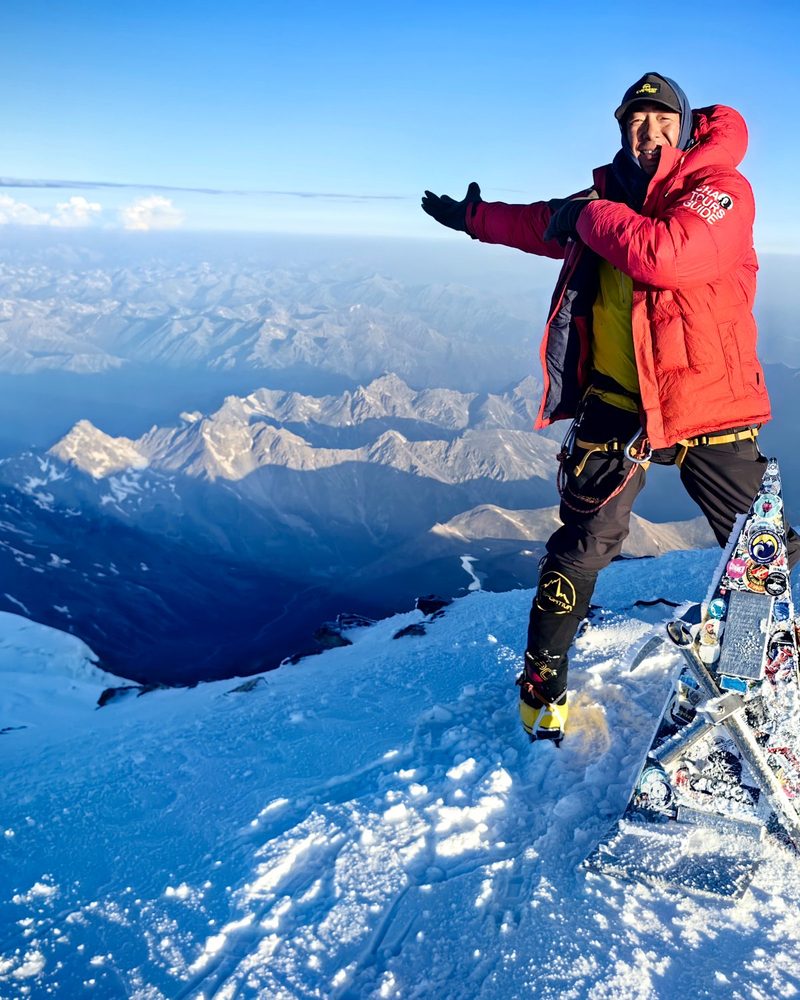
Chatur has led expeditions across the Himalayas, the Caucasus, and South America since 1995. Eight Everest summits. Eight Manaslu summits. 187 Elbrus summits - including 55 in winter. He holds the NMA Sirdar Book (Red Book), the official Nepal Mountaineering Association credential for authorized expedition leaders, and is a certified Instructor-Guide through the Russian Mountaineering Federation through 2030.
Those numbers matter because every one of them required getting a team home safely. That is the responsibility he takes personally on every expedition.
Clients who have climbed with Chatur describe the same thing: when doubts set in at altitude and they were ready to turn back, his calm certainty that they could do it - paired with clear instructions to rest and recover - was what carried them through. Not pressure, not bravado. Just steady judgment from someone who has seen it before and knows what the right call looks like.
A practical guide that helps you assess where you actually stand - fitness, altitude experience, gear, and risk tolerance - before you talk to any operator. It covers what experienced climbers do differently, how to choose a logical progression from trek to summit, and what to look for when comparing expedition companies.
A smart progression builds confidence, data, and discipline. If you are unsure where you fit, start here:
Start with an acclimatization-focused trek to learn how your body responds above 4,000 meters. No guesswork - just data.
Start HereA 6,000m climb tests everything that matters: pacing, sleep, recovery, and decision-making under real summit pressure.
Explore 6,000m PeaksBuild technical skills and systems before committing to longer exposure and higher consequence. This is where rushed progression gets people in trouble.
Talk to a GuideAt this level, success is rarely about wanting it more. It is about acclimatization protocols, logistics precision, and the discipline to turn around.
View 8,000m ExpeditionsTell us your goal and your baseline - experience, timeline, and altitude history.
We pressure-test the plan. If the objective does not match the experience, we say so.
You get clear logistics: what is included, what is not, what to prepare, and what to expect.
On the mountain, we move at the right pace with steady communication and calm decisions.
Summit or not, we finish with the same priority: a well-run expedition you are proud of.
Whether you are planning your first high-altitude trek or preparing for an 8,000m expedition, a quick conversation can clarify your next step. No commitment - just honest guidance from someone who has been there.