Our approach

Good decisions start before the mountain.

You’re probably not here because you need convincing that high-altitude climbing is worth doing. You’re here because you’ve already decided – and now you’re looking for the operator who won’t cut corners once you’ve paid.

What separates a well-run expedition from a risky one.

Most people assume that expedition success comes down to fitness and weather. Those matter – but they’re rarely what determines the outcome.

The expeditions that go well share a few things in common. The objective matches the climber’s actual experience and readiness – not just their ambition. The acclimatization schedule follows physiology, not a brochure timeline. Logistics are confirmed and specific well before departure. And when conditions shift on the mountain – which they always do – leadership responds calmly, communicates openly, and adapts without panic.

The expeditions that go badly fail on these same points. Vague planning. Mismatched objectives. Schedules designed to look fast and efficient but leave no margin for the reality of altitude. Communication that disappears the moment things get difficult – or a last-minute substitute guide who has no idea what was included in your booking, what the itinerary looks like, or who arranged the trip.

If you’ve spent time reading expedition reviews and forum threads, you already know these patterns. The difference between a strong expedition and a dangerous one isn’t luck. It’s how the operation was built from the start.

Five things we do differently.

These are not marketing promises. They are the operating decisions behind every expedition we run – and the reasons clients come back for their next objective.

We plan around you – not around a brochure.

Every climber who contacts us has a different starting point. Different altitude history, different fitness, different risk tolerance, different timeline. A company that puts everyone on the same plan regardless is not planning at all – it’s just filling slots.

Before we recommend anything, we want to understand where you actually are – not where you wish you were. That means asking direct questions about your experience, your goals, and your gaps. If you’re not ready for the objective you have in mind, we will say so – clearly, not vaguely. And we will tell you exactly what to do first instead.

This is how you avoid the most common and most expensive mistake in high-altitude climbing: choosing the wrong mountain at the wrong time with the wrong team.
We build acclimatization into the plan – not around it.

Acclimatization isn’t a checkbox. It’s the single biggest factor in whether an expedition succeeds or falls apart – and it’s the first thing that gets compressed when an operator wants to shorten the itinerary and lower costs.

Tight timelines and aggressive ascent profiles sell well in a brochure. But they don’t account for how altitude actually works in your body. Experienced climbers have described guides who set a relentless pace, left the slower members behind, and essentially wore them down until they turned back. That is not leadership. That is a schedule overriding safety.

We build deliberate acclimatization into every itinerary. Rest days are real rest days, not disguised push days. Ascent profiles follow proven physiological guidelines. And if your body needs more time, the schedule adapts – because we plan for that from the start, not as an afterthought.

We tell you exactly what you’re paying for.

The stories we hear from climbers who’ve booked elsewhere follow a pattern. A meal plan that was “included” becomes a price negotiation at every stop. A representative who doesn’t know which hotel the group is booked into, and tries three before finding one with a reservation. An airport fee nobody mentioned. A guide whose first interaction with the group is a request for money, not an introduction. Pre-booked lodges cancelled days before departure, with the company going silent on refund requests. These aren’t isolated incidents – they’re what happens when the business model depends on ambiguity.

We handle this by being painfully specific before you book. Every expedition page lists exactly what’s included, what’s excluded, and where costs might vary – with actual numbers, not ranges. Tips and gratuities are listed with minimums. Extra oxygen pricing is published openly. If there’s a scenario where you’d pay more, you’ll know about it before you commit – not when you’re at base camp with no alternatives and no leverage.

Leadership stays present when conditions change.

Plans always change on big mountains. Weather shifts, conditions deteriorate, someone in the group isn’t moving well. These are normal parts of expedition life – and the moments where the gap between a strong operator and a weak one becomes impossible to ignore.

Climbers describe guides who walked fifty paces ahead watching videos on their phones. Guides who lost the group during acclimatization hikes and were spotted on a different ridge entirely when the fog cleared. Companies that never once checked whether their guide had arrived or whether the client was safe. That is not bad luck – it is a failure of leadership and systems.

Our guides are trained to stay with the group, communicate conditions clearly, and make hard calls early – before small issues become emergencies. That includes turning around when conditions say so, even when the summit is close. Especially when the summit is close. Climbers who have been through this with us consistently say the same thing: every decision was explained, every concern was heard, and they always knew exactly why the plan was changing.

Your insurance covers real emergencies – not our revenue.

Between 2022 and 2025, Nepali authorities found that hundreds of helicopter rescues in the Himalaya were fabricated or manipulated – generating roughly $20 million in fraudulent insurance claims. Some trekking operators and rescue firms pressured clients with mild symptoms into unnecessary evacuations. In the most disturbing cases, food was reportedly tampered with to mimic altitude sickness. Trekkers were airlifted, billed through insurance, and never told the evacuation wasn’t medically necessary. The fraud raised insurance premiums across the industry and damaged trust in Nepal’s entire expedition sector.

We require every client to carry valid mountaineering or trekking insurance with helicopter evacuation coverage – that’s non-negotiable for safety. But we will never pressure you into an evacuation you don’t need. Our guides assess altitude illness using standardized protocols and objective measurements, not financial incentives. If you need to descend, you descend. If you need a helicopter, we call one immediately. But no one on our team profits from your evacuation, and no one ever will.

How decisions get made on our expeditions.

Every decision points toward one outcome: getting you to the summit safely and bringing you back down the same way. That process starts long before the mountain – and it follows a structure, not a guess.

Before the expedition starts

We pressure-test the plan with you. Is the objective realistic given your experience? Is the timeline sound? Are there gaps in your preparation we should address now – while there’s still time to close them? You will know exactly what is included, what is not, and what conditions could change costs before you make any commitment. The goal is simple: make sure nothing is left to chance that doesn’t have to be.

During the expedition

Our lead guide sets the pace, monitors the group, and communicates conditions openly – not from fifty paces ahead, but from within the team. Acclimatization days are structured to build your body’s readiness for summit day, not to fill time. If the plan needs adjusting, you will know what changed and why. Every decision is oriented toward putting you in the best position to summit strong.

On summit day

Our guides have made this push hundreds of times across Everest, Manaslu, Elbrus, and a dozen other peaks. They know the routes, they know the weather patterns, and they know how to read the group. The vast majority of the time, preparation pays off and the team reaches the top. In rare cases where conditions make a safe summit impossible, we call it clearly – no guilt, no ego. Your safety and your life are worth more than any peak.

After the expedition

Whether you stood on the summit or turned 200 meters short, you leave with a clear understanding of what happened, what you learned, and what your next step looks like. Many of our clients come back for their next objective – and that next conversation starts from a very different place than the first one. A well-run expedition always moves you forward.

Things you’ll never experience with us.

We won’t match you to an expedition you’re not ready for – even if it means losing the booking. If someone reaches out about Everest and their highest altitude is a weekend trek, the answer isn’t “let’s make it work.” It’s “let’s build toward it.”

We won’t hand you off to a substitute guide who has never seen the itinerary. You’ll know who is leading your expedition before you book, and you will be able to speak with them directly – not with a sales office that disappears once the deposit clears.

We won’t compress your acclimatization to save a few days on the schedule. If the plan needs an extra rest day, the plan gets an extra rest day – and you won’t have to argue for it.

We won’t surprise you with costs at base camp. No airport fees that were never mentioned, no food bills that were supposed to be included, no last-minute requests for cash. If something is not included, it is listed clearly before you book.

And we won’t go quiet when things get complicated. When plans change – and they do – you will hear from leadership directly, with an explanation and a revised plan. Not silence. Not a phone you have to buy WiFi credits to use because nobody from the company has checked in.

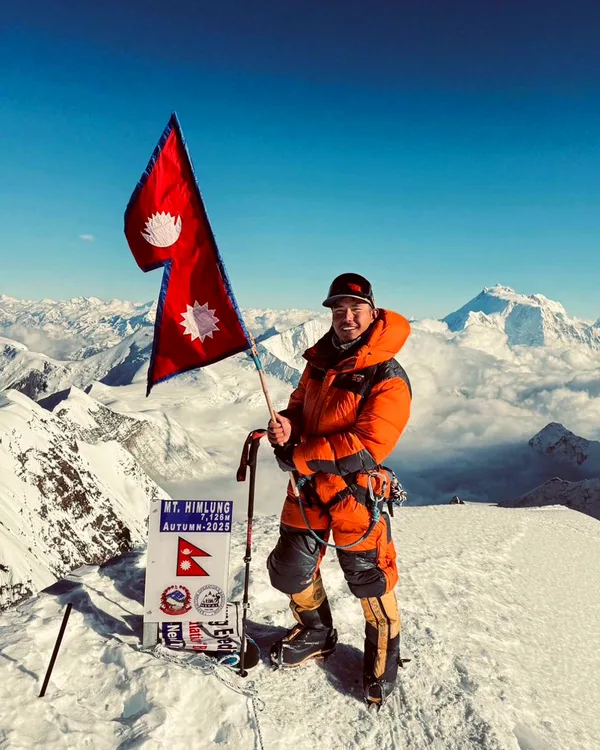
Chatur Tamang on the summit of Mt. Himlung (7,126m) with Nepal flag, Autumn 2025

This approach starts with the people who lead it.

Chatur Tamang has been leading expeditions since 1995 – across the Himalayas, the Caucasus, and South America. Eight Everest summits. Eight Manaslu summits. 187 Elbrus summits. Certified by the Nepal Mountaineering Association, registered in the NMA Sirdar Book, and a member of the Russian Mountaineering Federation. Behind every one of those numbers is a team that came home safe – because that’s the responsibility Chatur takes personally on every expedition he leads.

The rest of the team – senior climbing guides, trek leaders, operations staff – are selected for the same values. Technical skill, yes. But also judgment, communication, and a deep sense of responsibility for every person on the mountain. Past clients often point to one thing above all else: that the team was available and responsive at every stage, from the first inquiry through summit day. When you climb with Everest2Elbrus, you’re not a name on a roster. You’re someone whose preparation, safety, and goals the team takes seriously from the first conversation.

See if this approach fits your objective.

A short conversation with a guide can answer the questions that are hard to answer from a website – whether that’s about a specific expedition, your readiness for a particular objective, or just what honest preparation looks like for the goal you have in mind.

Straight answers. Clear next steps. Same team that leads the expeditions.

Scroll to Top